
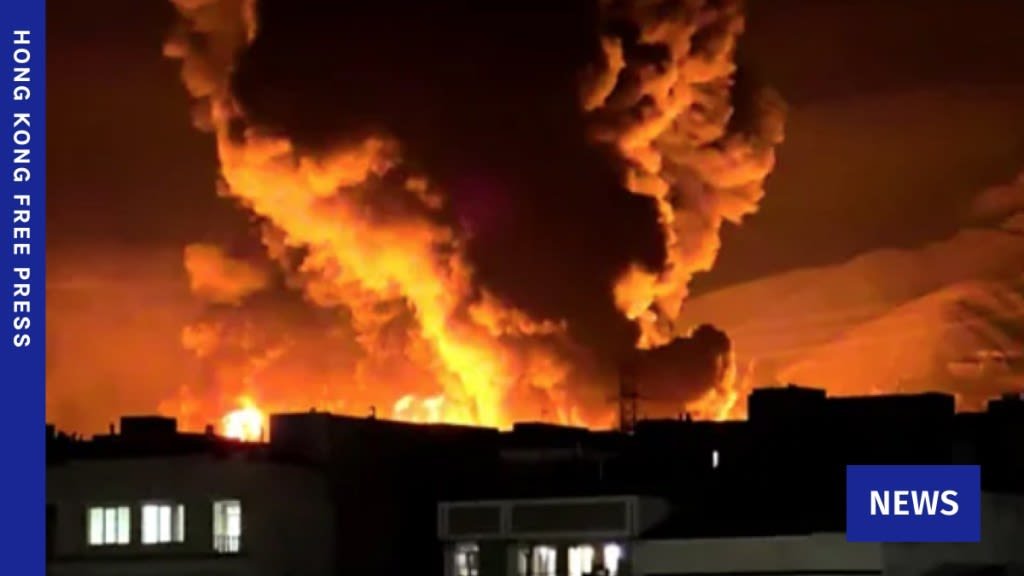
Hongkongers are facing a growing concern over rising energy costs, as regional markets experience volatility due to the ongoing conflict in the Middle East. The situation has been exacerbated by a surge in oil prices, which have crossed the critical threshold of US$100 per barrel for the first time since 2022. This development comes as the US-Israeli military campaign against Iran continues into its second week, with no immediate signs of de-escalation.
Billy Mak, an associate professor of economics at Hong Kong Baptist University, highlighted the direct impact of fuel costs on electricity bills in Hong Kong. He explained that the Fuel Adjustment Clause is used to reflect changes in fuel prices within monthly tariff adjustments. During a media appearance after a Commercial Radio programme, Mak expressed concerns about potential future increases in oil prices, drawing a parallel to the surge seen during the Russia-Ukraine war.
“Oil could potentially reach US$150 per barrel,” Mak warned, emphasizing that this would lead to higher electricity costs for consumers. “In the near future, we can expect our electricity prices to rise because the fuel cost adjustment account will increase,” he said, according to RTHK.
Ringo Lee, honorary life president of the Hong Kong, China Automobile Association, called on the government to provide temporary relief to drivers amid the rising fuel costs. He pointed out that oil companies tend to raise prices rapidly but lower them slowly, leaving drivers with little choice but to bear the increased expenses.
“Hong Kong drivers have no choice but to bear expensive fuel,” Lee stated on RTHK.
Meanwhile, US President Donald Trump reiterated his stance on the conflict, suggesting that only an “unconditional surrender” of Iran could bring an end to the war. His comments were made aboard Air Force One, where he described the scenario as one where Iran would “cry uncle” or be unable to continue fighting due to lack of support.
“I said unconditional. It’s where they cry uncle or when they can’t fight any longer and there’s nobody around to cry uncle – that could happen too,” Trump told reporters, according to the Guardian.
Trump also claimed that rising oil prices were a “small price to pay” to eliminate what he described as Iran’s nuclear threat.
The conflict has resulted in significant casualties, with at least 1,255 people killed in attacks in Iran, and at least 13 deaths reported in Israel, according to Al-Jazeera. Additionally, seven US soldiers were killed, as confirmed by US Central Command, following attacks on US bases and surrounding areas by Tehran.

Asian markets have experienced a downturn amid the geopolitical tensions. Hong Kong’s Hang Seng Index closed down 1.4% at 25,408.46 points on Monday. Similar declines were observed in stock markets across Shanghai, Sydney, Singapore, Manila, Bangkok, Mumbai, Jakarta, and Wellington.
Initial Public Offerings (IPOs) on the local stock market also faced challenges on Monday. Several Chinese firms, including Shenzhen Zhaowei Machinery & Electronics, Estun Automation, and Alsco Pooling Service, launched their IPOs following the Lunar New Year holiday.
According to Reuters, Zhaowei, a micro-drive provider, performed the best among the listed companies, with its shares rising 4% to HK$71.28 from its initial offering. However, robot-maker Estun saw a 14% drop in its share price, while Alsco Pooling Service experienced a steep decline of 40%.
MeiG Smart Technology is set to list on Tuesday, adding to the list of companies entering the market.