

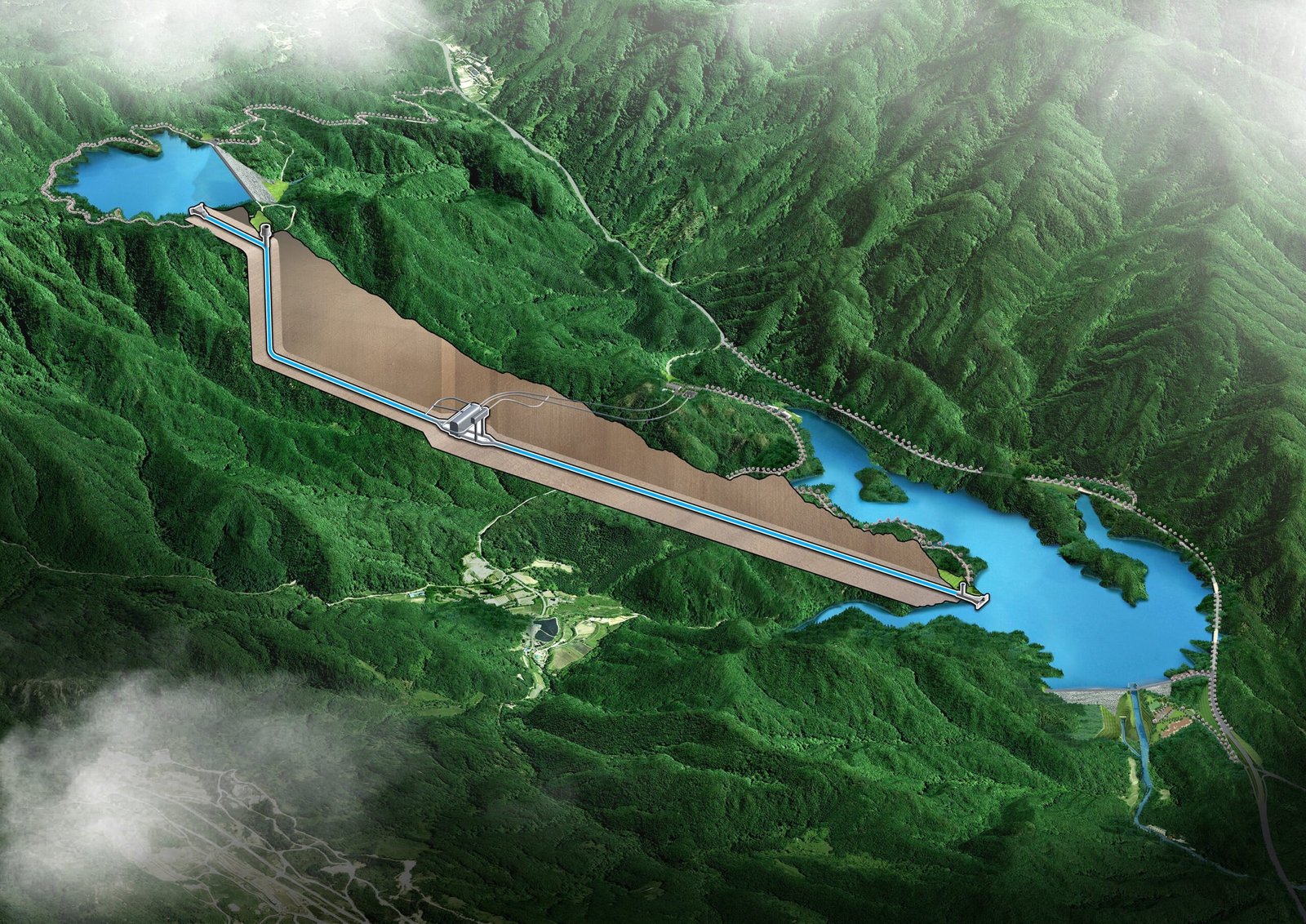
Major Infrastructure Project in South Korea
South Korea’s energy sector has taken a significant step forward with the announcement of a major infrastructure project. Korea Hydro & Nuclear Power, a leading state-owned enterprise in the country, revealed on the 17th that it has selected a joint venture led by Hyundai Engineering & Construction as the primary contractor for the construction of Units 1 and 2 of the Pocheon Pumped-Storage Power Plant. The winning bid amount is approximately 527.7 billion Korean won, marking a substantial investment in the nation’s energy infrastructure.
The Pocheon Pumped-Storage Power Plant will be located in the Dopyeong-ri area of Idong-myeon, Pocheon City, within Gyeonggi Province. The facility is designed to have a total capacity of 700 megawatts (MW), making it a key asset in supporting the region’s growing energy demands. Hyundai Engineering & Construction plans to start the construction process this month and aims to complete the project by December 2033.
This development is part of a broader strategy by Korea Hydro & Nuclear Power to expand its presence in the renewable energy sector. In addition to the Pocheon project, the company also plans to construct additional pumped-storage power plants in Hapcheon, located in South Gyeongsang Province, and Yeongyang, in North Gyeongsang Province. These projects are expected to enhance the stability of the national power grid and support the increasing integration of renewable energy sources.
A spokesperson from Korea Hydro & Nuclear Power emphasized the importance of these projects, stating, “Through pumped-storage power plants, which enable power supply and demand adjustment, we will contribute to optimizing the energy mix necessary in the era of expanding renewable energy.”
Benefits of Pumped-Storage Power Plants
Pumped-storage power plants play a crucial role in modern energy systems by acting as large-scale energy storage solutions. They work by using excess electricity during periods of low demand to pump water from a lower reservoir to an upper reservoir. When there is high demand, the stored water is released back through turbines to generate electricity. This process helps balance the grid and ensures a more reliable energy supply.
Key advantages of pumped-storage power plants include:
- Energy Storage: They allow for the efficient storage of surplus energy, which can be used during peak demand periods.
- Grid Stability: By providing quick response to fluctuations in energy supply and demand, they help maintain grid stability.
- Renewable Integration: As renewable energy sources like wind and solar become more prevalent, pumped-storage facilities help manage their intermittent nature.
These benefits make pumped-storage power plants essential components of a sustainable and resilient energy system, particularly in regions experiencing rapid growth in renewable energy production.
Future Plans and Implications
The selection of Hyundai Engineering & Construction for the Pocheon project highlights the company’s expertise in large-scale infrastructure development. With a track record of successful projects across various sectors, the joint venture is well-positioned to deliver the Pocheon Pumped-Storage Power Plant on time and within budget.
Moreover, the expansion of pumped-storage facilities in Hapcheon and Yeongyang signals a strategic move towards diversifying South Korea’s energy portfolio. These projects are expected to create thousands of jobs and stimulate local economies, further reinforcing the government’s commitment to sustainable development.
As South Korea continues to invest in clean energy and advanced infrastructure, the role of pumped-storage power plants will only grow in importance. By leveraging these technologies, the country is taking meaningful steps toward a more secure, efficient, and environmentally friendly energy future.