

The Rise of Chinese Tea Brands in South Korea
More Koreans are traveling to China, thanks to Beijing’s visa-free policies, and discovering tea-based beverages that have captured their attention. These drinks, infused with fruit, juices, vegetables, and dairy products, are prepared fresh on-site, offering a unique experience that is becoming increasingly popular.
Chinese tea brands are now accelerating their expansion into South Korea, driven by the need to compete at home and the rising demand for healthier beverages in a market long dominated by coffee. One such brand, Chagee, known for its milk tea and branding inspired by traditional Chinese culture, has announced plans to open three stores in Seoul in the second quarter, marking its first expansion into East Asia outside China.
Chagee currently operates 7,338 teahouses as of the end of September and has built a significant presence across Southeast Asia, including Indonesia, Malaysia, the Philippines, Vietnam, Singapore, and Thailand. In the third quarter of 2025, its overseas gross merchandise value rose 75.3 per cent year on year to 300.3 million yuan (US$43.6 million), according to its latest available data.
Choi Yong-hee, a 34-year-old graduate student based in the university district of Sinchon, where Chagee plans to open one of its outlets, is among those consumers. He first encountered the brand during a family trip to Shanghai last October.
“What I liked about Chagee was that the milk tea wasn’t too strong and was fragrant, making it easy to enjoy. I haven’t been able to find milk tea like this in Korea,” Choi said. “I’m glad I can have it more often now.”
Social media is also fueling the trend, with users sharing menu recommendations and reviews. Google Trends data shows that searches for “Chagee tea” in South Korea have risen 110 per cent over the past three months.
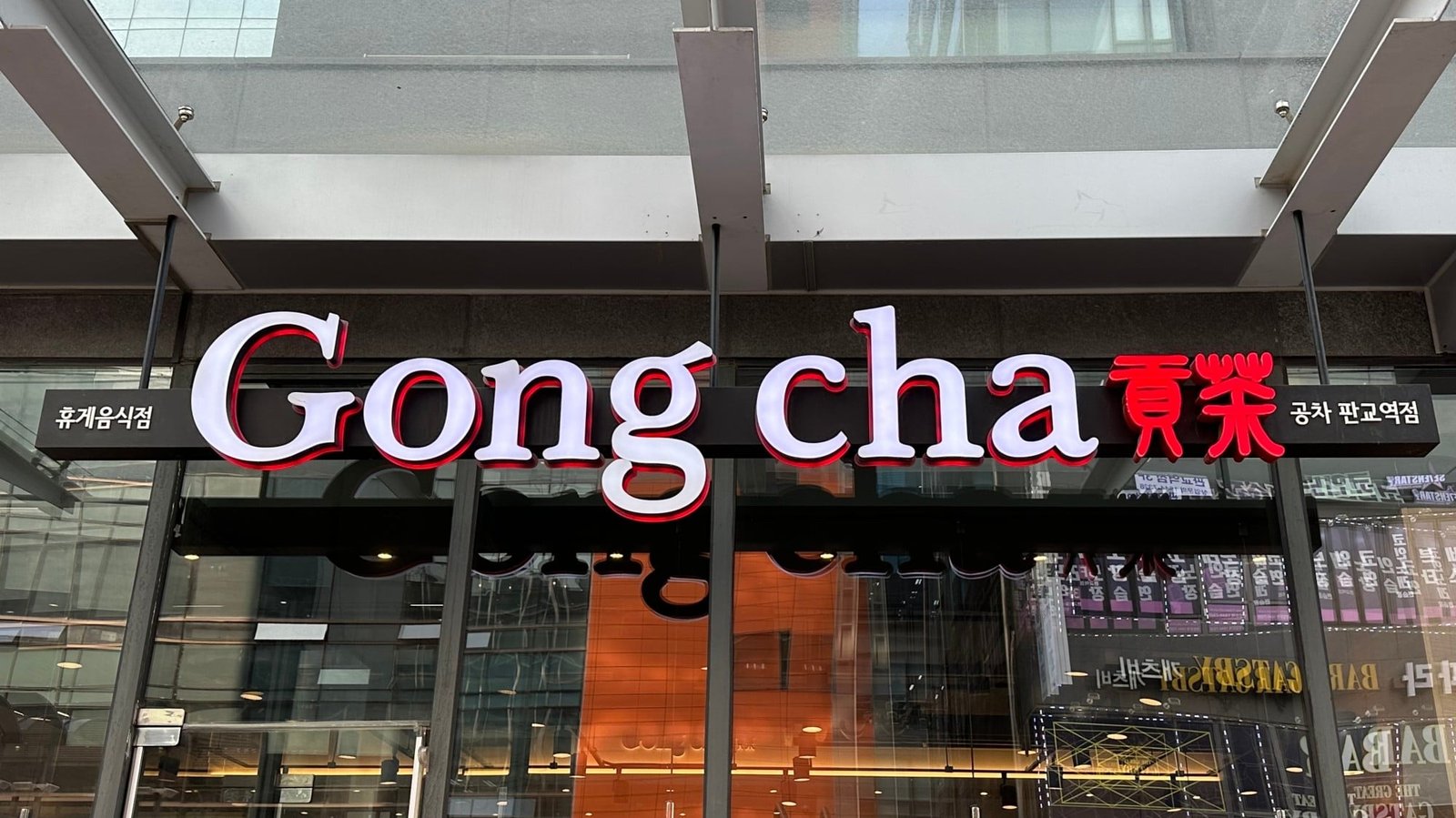
For years, Taiwan’s Gong Cha dominated South Korea’s milk tea market. Founded in Kaohsiung in 2006, the brand entered Seoul in 2012 with its first outlet. In January 2017, Gong Cha Korea acquired its Taiwanese parent company, making the brand Korean-owned. As of 2024, it had 836 outlets nationwide.
In a market where coffee has long held overwhelming popularity, no tea brands have achieved comparable success beyond Gong Cha. However, tea-based beverages are gaining ground as a healthier alternative to coffee for South Koreans, analysts say, and Chinese tea brands are looking to capitalize on the trend.
Auntea Jenny, a bubble tea chain founded in Shanghai, registered its franchise operations in South Korea last month, a necessary step before launching franchising stores, local news agency Newsis reported. The company opened its first Seoul store in October.
Another industry player, Chabaidao, entered the South Korean market in 2024 and now operates around 20 stores, while rivals HeyTea and Mixue have reached six and 14 outlets, respectively.
Analysts said the push into South Korea reflected a broader Asia-Pacific expansion drive as China’s “new-style tea” market becomes increasingly saturated.

Shanghai-based consultancy Triunity said in May that annual growth in the sector slowed from 44 per cent in 2023 to 19.7 per cent in 2024, and was projected to fall to 12.4 per cent in 2025.
The Chinese brands have already built momentum in Southeast Asia, their first overseas market due to geographic proximity and stronger acceptance of Chinese labels. Mixue and Chagee expanded their store networks in the region by 80 per cent between 2019 and 2024, according to a July report by Euromonitor International, while both identified Southeast Asia as a key growth driver in initial public offering filings.
The playbook—rapid expansion in prime retail locations, competitive pricing, introduction of localised flavours and leveraging celebrities to drive awareness on social media—has proved effective and is now being replicated in other markets, according to Moqian Sun, founder of marketing and consulting strategy firm The Harvest.
“Consumers across APAC are already highly receptive to tea-based drinks, which makes it easier to replicate proven business models,” Sun said.
However, long-term success would depend on how well brands localised their offerings, as well as their ability to manage supply chains and maintain consistent store quality, she added.