
Government Takes Action to Address Naphtha Supply Chain Risks
The government has taken significant steps to address the growing supply chain risks associated with naphtha, a critical raw material for the petrochemical industry. As part of these efforts, naphtha has been designated as an economic security item, and the government has allocated 1.5 trillion Korean won in financial support to companies affected by disruptions in the supply chain.
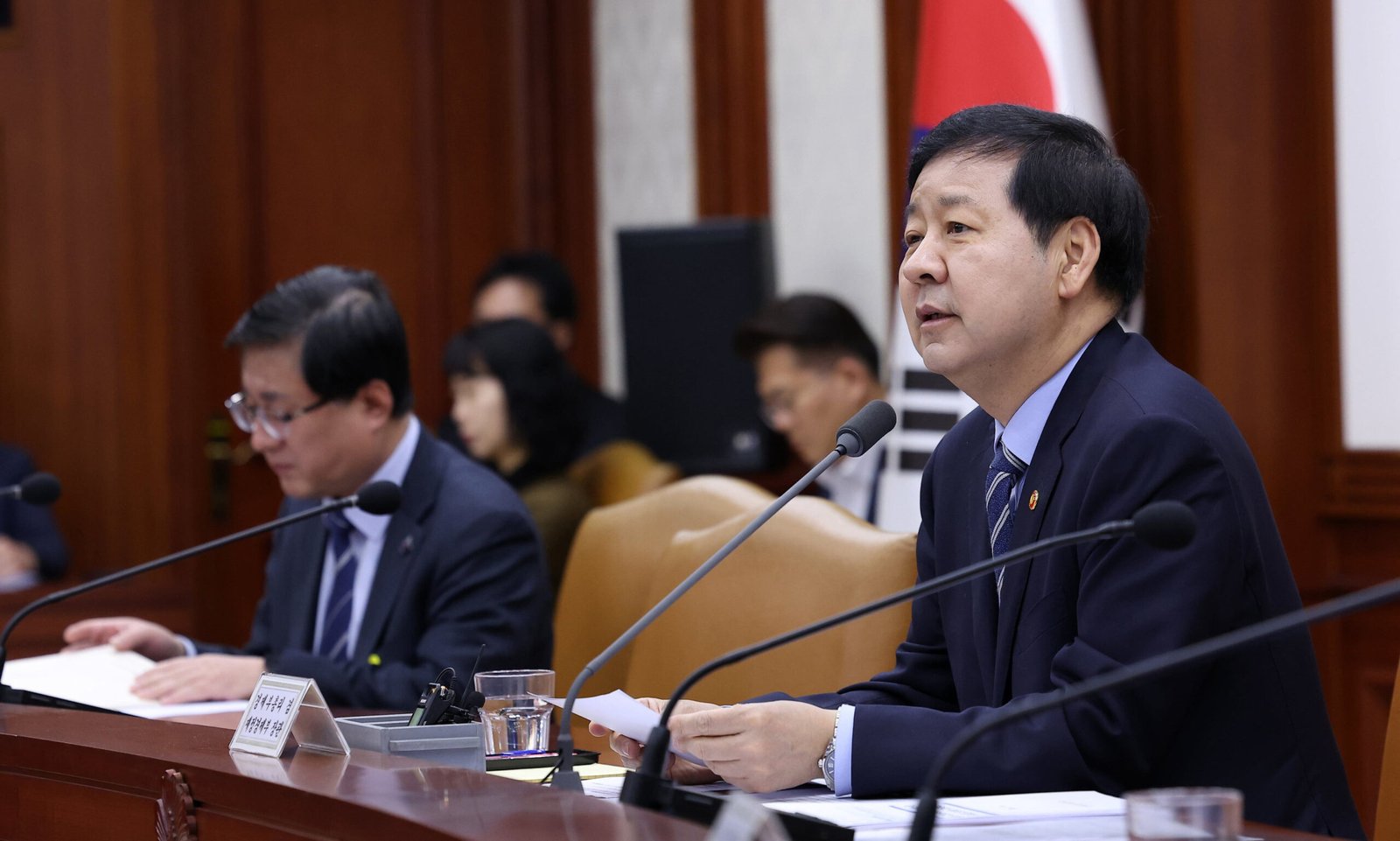
During an emergency economic ministerial meeting held on the 18th, Deputy Prime Minister and Minister of Finance and Economy Koo Yun-cheol emphasized the need for proactive measures to stabilize the supply chain. He stated, “We will temporarily designate naphtha, which has recently faced heightened supply chain risks, as an economic security item. We will closely monitor supply and demand trends and companies’ difficulties, and implement proactive measures such as securing alternative import sources and export restrictions.”
This decision came in response to disruptions in the supply of Middle Eastern naphtha, including from the UAE, due to the aftermath of Iran’s blockade of the Strait of Hormuz. Approximately 54% of domestic naphtha imports pass through the Strait of Hormuz. Domestic naphtha prices have surged 44.8% compared to the previous week and 67.2% compared to the beginning of the year, reaching $1,009 per ton as of the 11th based on Japanese import prices (C&F).
Naphtha is a key raw material in the petrochemical industry, used in the production of synthetic fibers, rubber, plastics, and other products after being processed into ethylene and other substances. Some naphtha cracking center (NCC) companies have already notified their clients that they may face difficulties in supplying contracted volumes. Petrochemical companies that receive raw materials from these NCCs are currently monitoring the situation closely.
To support companies affected by supply chain disruptions, the government will expand financial support to the tune of 1.5 trillion Korean won. This will be achieved through a special support program for Middle East-related damages within the Supply Chain Stabilization Fund. The support will cover the difference in alternative import costs and provide emergency operating funds to affected companies. Additionally, preferential interest rates of up to 2.3 percentage points will be offered to companies handling economically sensitive items with high dependence on the Middle East.
In addition to this, the government has decided to strengthen the management of petroleum product prices. Deputy Prime Minister Koo emphasized, “As refinery supply prices have significantly decreased following the implementation of the maximum price system, consumer prices at gas stations must also decrease without delay. The government will continuously monitor petroleum product price trends and strictly penalize unfair practices such as hoarding and refusal to sell through on-site inspections and a reporting center.”
AI-Applied Product Development Initiative
On the same day, the government announced plans to promote the ‘AI-Applied Product Rapid Commercialization Support Project (AX-Sprint).’ This initiative aims to accelerate the early commercialization of products applying artificial intelligence (AI) technology.
The government will launch a support project worth 750 billion Korean won over two years to support the development and commercialization of 246 AI-applied products and services across various sectors, including manufacturing, agriculture, healthcare, transportation, and more. The goal is to rapidly spread AI across industries by supporting the development and market launch of these products within one to two years.
The project focuses on connecting AI technology with actual products and services. It reflects the assessment that while domestic companies recognize the necessity of AI, its actual utilization has been limited. The government will invest a total of 754 billion Korean won from this year to next year to support the development and commercialization of 246 tasks. This year alone, 613.5 billion won will be executed, with 473.5 billion won allocated for product development and launch costs, and the remaining 140 billion won used to expand loan limits and offer preferential interest rates for small and medium-sized enterprises. Next year, an additional 140.5 billion won will be provided for 101 tasks.
The support targets five major sectors: manufacturing, agriculture·livestock·fisheries, land·transportation, health·welfare·environment, and daily life·security·defense. Examples include a ‘work guide’ system that digitizes skilled workers’ know-how using AI to provide real-time task guidance to novice personnel, an autonomous navigation robot that automatically detects and collects marine waste, an AI robot that ensures the safety of road workers, an AI-assisted walking device that reduces the risk of falls among the elderly, and a physical AI robot that performs non-standard manual tasks such as processing raw tuna.
The government will provide customized support for securing equipment and software, prototyping, certification·patents, and promotional costs to help companies bring actual products to market. Since this supports the commercialization of products where R&D has been completed, R&D costs will not be supported.
Follow-up support, including participation in overseas exhibitions, linkage with public procurement, and application of regulatory sandboxes, will be provided for outstanding products. In particular, if recognized for innovation, designation as an ‘innovative product’ eligible for direct procurement by public institutions will also be pursued.
The government plans to start announcing projects by ministry from the 19th and finalize the support targets within the second quarter after evaluations from April to June.