
Indonesia’s Controversial Involvement in the “Board of Peace”
Indonesia’s participation in the so-called “Board of Peace,” an initiative linked to former US President Donald Trump, has sparked intense debate within the country. As tensions escalate in the Middle East, critics are calling on Jakarta to reconsider its involvement and reevaluate related policies, including plans to send troops to Gaza and a recent trade deal with the United States.
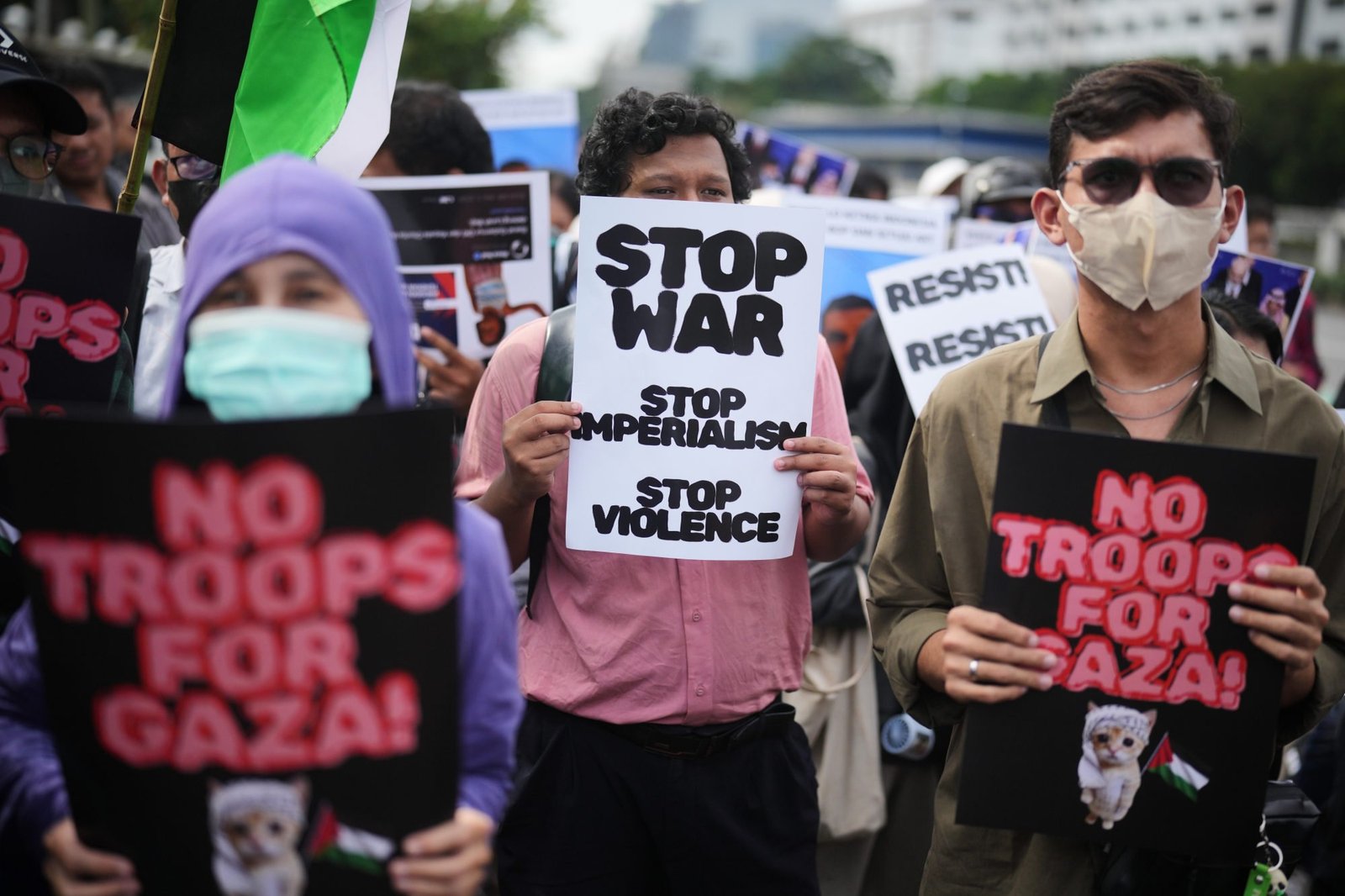
The controversy centers around concerns that Indonesia may be compromising its strategic autonomy by aligning more closely with Washington. This has led to growing public pressure, with small-scale protests taking place in Jakarta and religious leaders and human rights groups issuing petitions demanding the government withdraw from the board.
One such petition, issued by the National Conscience Movement, highlights a constitutional requirement for the president to seek approval from the House of Representatives before concluding international agreements that have significant implications for the population. The letter calls for the immediate withdrawal of Indonesia from the “Board of Peace” and the cancellation of troop deployments to Gaza.
Despite these criticisms, Indonesian officials have emphasized that the country remains committed to its non-aligned foreign policy. President Prabowo Subianto has previously stated that he would leave the organization if it did not benefit Palestinians. Meanwhile, Foreign Minister Sugiono mentioned that discussions about the board were “on hold” as attention shifted to Iran. However, Indonesia continues to be a member of the group.

Analysts argue that the growing public pressure on Indonesia to pull out of the “Board of Peace,” revoke the Indonesia-US trade deal, and cancel the Gaza deployment reflects a lack of support for Prabowo’s closer ties with Washington. Shofwan Al Banna Choiruzzad, an international relations lecturer at the University of Indonesia, noted that the demands to leave the board indicate a strong level of distrust in the Trump-created initiative.
Prabowo has defended his stance, stating that Indonesia is on the right track and maintaining an impartial position. He emphasized the country’s commitment to being free, active, and non-aligned.
In response to the criticism, the Executive Office of the President (EOP) released a statement analyzing the 20-point Gaza peace framework proposed by the board. It concluded that the framework offers a “practical and implementable pathway” for Palestinian independence. Ulta Levenia, a senior expert at the EOP, highlighted that while the language may differ, the framework clearly provides a pathway for the Palestinian Authority towards self-determination and statehood.
However, some experts suggest that Indonesia could adopt a more passive approach rather than abruptly withdrawing from the board. Siti Mutiah Setiawati, a professor of international relations at Gadjah Mada University, proposed that Indonesia could choose “passive quitting” by avoiding participation in board activities without formally declaring withdrawal. This strategy, she argued, would help avoid potential consequences such as sudden tariff increases by the US.
As the situation in the Middle East continues to evolve, Indonesia faces increasing challenges. On Monday, Prabowo warned of “difficulties as a result of the war in the Middle East” but expressed confidence that Indonesia would emerge stronger and more self-sufficient.
The economic impact of the conflict has also been felt in Indonesia. The rupiah briefly touched 17,009 against the US dollar, and the price of Brent crude oil surged past $100 per barrel—its highest level since Russia’s 2022 invasion of Ukraine. This has led to panic buying of fuel in several provinces, including Aceh, East Kalimantan, and Bangka Belitung Islands.
Finance Minister Purbaya Yudhi Sadewa assured the public that the government would not raise fuel costs to accommodate the oil price increase. He emphasized that the government would continue to assess global oil prices over time.
Regional security concerns have also prompted the Indonesian Armed Forces to issue an “Alert 1,” the highest level of alert. This has resulted in increased military presence at strategic locations such as airports, seaports, railway stations, and other public facilities.
Although the war in the Middle East has not directly affected Indonesia, three of its citizens were reported missing after a United Arab Emirates-flagged tugboat caught fire and sank in the Strait of Hormuz. One Indonesian survivor sustained burn injuries and is currently receiving treatment in Oman. The foreign ministry has called for a thorough investigation into the incident.
Shofwan Al Banna Choiruzzad believes that the ripple effects from the US-Israel attacks on Iran will further motivate Prabowo to broker peace in the Middle East. While he agrees that Indonesia cannot remain silent, he suggests that there may be more feasible mechanisms, such as using the Organisation of Islamic Cooperation or the United Nations to build collective pressure on the US.