
Introduction to the Indirect Fire Protection Capability (IFPC)
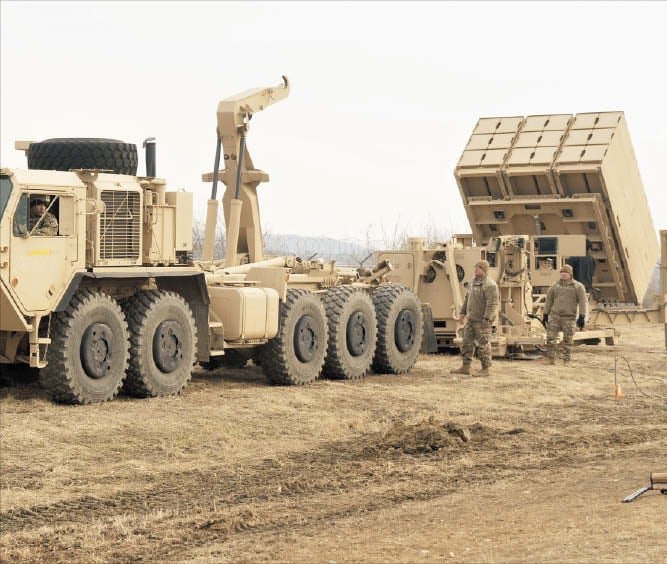
The U.S. Forces Korea (USFK) recently confirmed that during the South Korea-U.S. joint exercise ‘Freedom Shield,’ which began on the 9th, they conducted operational drills for the latest air defense system known as the Indirect Fire Protection Capability (IFPC). This system, often referred to as the U.S. version of the ‘Iron Dome,’ is capable of 360-degree detection and engagement. It can counter subsonic cruise missiles, drones, rocket artillery, and mortar attacks. The IFPC was reportedly the first such system deployed to the Korean Peninsula among overseas U.S. military bases last year.
Integration into Defense Systems
The 8th Army stated to this newspaper, “This is the first time the IFPC has participated in a South Korea-U.S. joint exercise.” During the training period, the IFPC was integrated into the U.S. Army’s Integrated Air and Missile Defense Battle Command System (IBCS) to evaluate its performance as part of South Korea’s layered defense system. There is significant speculation that the drills involved multi-layered interception training by linking the low-altitude-capable IFPC with the Terminal High Altitude Area Defense (THAAD) system for high-altitude defense and Patriot radar for mid-altitude interception.
Complementing THAAD Capabilities
THAAD, with a minimum interception altitude of 40 km, cannot respond to low-flying enemy drones or cruise missiles. The IFPC complements THAAD’s blind spots. Shin Jong-woo, Secretary-General of the Korea Defense and Security Forum, said, “The IFPC is a weapon system that blocks enemy drones and cruise missiles with interception missiles costing less than 1 billion Korean won per round, offering better ‘cost-effectiveness’ than Patriot or THAAD.” However, the IFPC cannot replace THAAD’s terminal high-altitude missile interception capability.
Operational Capabilities and Strategic Implications
The IFPC can launch modified ground-based versions of air-to-air Sidewinder missiles to counter enemy suicide drones and mortar attacks. This deployment is interpreted as a response to the drone force expansion by China and North Korea. A military official said, “The drills likely incorporated scenarios of suicide drone attacks by North Korea and neighboring countries.”
Discussions on THAAD Relocation
Meanwhile, Michael Duffy, U.S. Under Secretary of Defense for Acquisition and Sustainment, avoided direct answers to questions about the relocation of THAAD units stationed in South Korea during a U.S. House of Representatives hearing on the 17th (local time). He stated, “The flexibility and capability to reposition assets to meet the most urgent needs worldwide are tremendous strengths of our system.” This is interpreted as implying that part of the THAAD battery in Seongju, North Gyeongsang Province, has been relocated overseas.
Additional Information
For readers interested in more content, there are various membership options available. For instance, a monthly membership priced at 5900 won offers access to newspapers for readers at 2900 won. Another option includes 55000 won worth of eight different newspapers and magazines, accessible through the Chosun Membership. Additionally, members can receive 7000 points to use like cash for shopping, further enhancing the value of the Chosun Membership.