

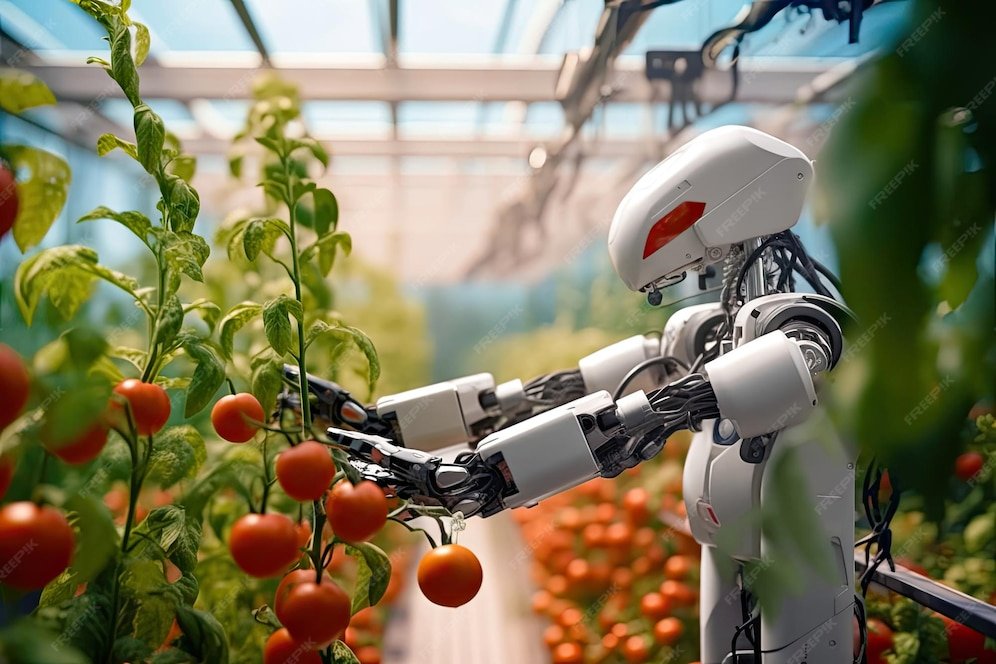
Advancements in Agricultural Robotics
Researchers have made significant strides in the field of agricultural technology by developing an AI-powered robot capable of harvesting tomatoes more efficiently. This innovative machine not only identifies ripe tomatoes but also determines the most effective method for picking each fruit, marking a major breakthrough in automated farming.
The increasing challenge of labor shortages in the agriculture sector has prompted a shift towards automation, particularly in the area of harvesting. Tomatoes, in particular, pose unique challenges for machines due to their clustered growth patterns. A robot must be able to carefully select ripe fruits without causing damage to nearby unripe ones, which requires precision and intelligent decision-making.
To tackle this issue, Assistant Professor Takuya Fujinaga from the Graduate School of Engineering at Osaka Metropolitan University developed a system that enables robots to assess how easy it is to pick a tomato before attempting to harvest it. This system combines image recognition with data analysis to determine the optimal angle for picking, taking into account factors such as the position of the tomato, its stems, and whether it is obscured by leaves or other parts of the plant.
Unlike traditional systems that simply detect the presence of fruit, this new approach introduces “harvest-ease estimation,” a method that measures the likelihood of a successful harvest. During testing, the robot achieved an impressive 81 percent success rate. In some instances, the robot adjusted its strategy and successfully picked tomatoes from the side after initial attempts from the front failed.
The study highlights several factors that influence robotic harvesting, including the way tomatoes grow, the positioning of their stems, and visual obstructions like leaves. These elements all play a critical role in determining the effectiveness of the harvesting process.
According to the researchers, this technology could pave the way for improved collaboration between humans and robots in farming operations. By delegating easier tasks to robots, human workers can focus on more complex harvesting activities, thereby enhancing overall efficiency in agricultural practices.
The findings of this research were published in the journal ‘Smart Agricultural Technology’, showcasing the potential of AI-driven solutions in transforming modern agriculture. As the industry continues to evolve, such innovations are likely to become increasingly vital in addressing the challenges of food production and labor management.