

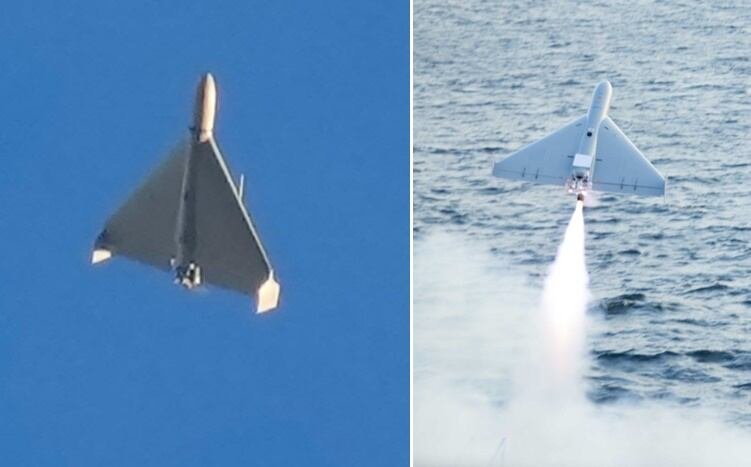
The U.S. Military’s New Strategy: Mass-Producing Affordable Drones
The U.S. Department of Defense has unveiled a groundbreaking plan to mass-produce a reverse-engineered version of Iran’s Shahed-136 kamikaze drone. This initiative is part of a broader strategy to replace expensive weapons with large-scale production of cost-effective drones, which are now a central element of modern warfare.
According to a report by the Wall Street Journal, the Pentagon is working on a program called “LUCAS” (Low-cost Unmanned Combat Attack System). Emil Michael, the Undersecretary for Research and Engineering at the U.S. Department of Defense, emphasized the importance of this project during a defense conference in Washington, D.C. He stated, “The core idea is to mass-produce these drones domestically and have the capacity to rapidly scale production when needed. So far, this weapon has performed exceptionally well.”
What Makes LUCAS Unique?
LUCAS takes its name from the acronym for “Low-cost Unmanned Combat Attack System.” The U.S. military disassembled an Iranian Shahed-136 drone that was captured several years ago. They retained the structural design of the original drone and integrated advanced U.S. technology to develop LUCAS.
Both LUCAS and the Shahed-136 share a similar triangular shape. The Shahed-136 measures 3.5 meters in length, 2.5 meters in width, and weighs 200 kilograms. It has a maximum range of 2,500 kilometers and can carry up to 50 kilograms of explosives in its nose, autonomously striking targets.
In contrast, LUCAS is slightly smaller, measuring 3 meters in length, 2.43 meters in width, and weighing 80 kilograms. It has a maximum flight range of 800 kilometers and can carry approximately 20 kilograms of explosives.
A Growing Threat from Iran
In the ongoing conflict involving the U.S. and Israel, Iran has launched thousands of kamikaze drones to attack key facilities in the Middle East. According to Reuters, Iran fired over 1,000 drones in the first week of the war alone. Critics have pointed out the irony of spending $4 million per Patriot interceptor missile to shoot down a $20,000 drone.
LUCAS, produced by the U.S. firm SpektreWorks, has already been deployed in combat during the “Epic Fury” operation. It has contributed to the neutralization of Iranian surface-to-air missile launchers. However, the exact number of LUCAS drones used in this conflict remains undisclosed.
Cost Efficiency and Strategic Importance
Bloomberg reported that the estimated cost per LUCAS unit is around $55,000, with the goal of replacing U.S. cruise missiles that cost millions of dollars per unit. This shift toward more affordable and scalable drone technology is seen as a game-changer in modern warfare.
The development of LUCAS highlights the growing importance of unmanned systems in military operations. By leveraging reverse engineering and integrating advanced U.S. technology, the Pentagon is not only reducing costs but also enhancing its ability to respond quickly to emerging threats.
Future Implications
As the U.S. military continues to refine and expand its use of drones like LUCAS, it is clear that the future of warfare will be shaped by these low-cost, high-impact technologies. The ability to mass-produce such systems domestically ensures that the U.S. can maintain a strategic advantage while minimizing financial and operational risks.
With ongoing conflicts and evolving threats, the success of programs like LUCAS could redefine how nations approach military engagements, emphasizing speed, adaptability, and cost-effectiveness. As the world watches, the implications of this technological shift are just beginning to unfold.