

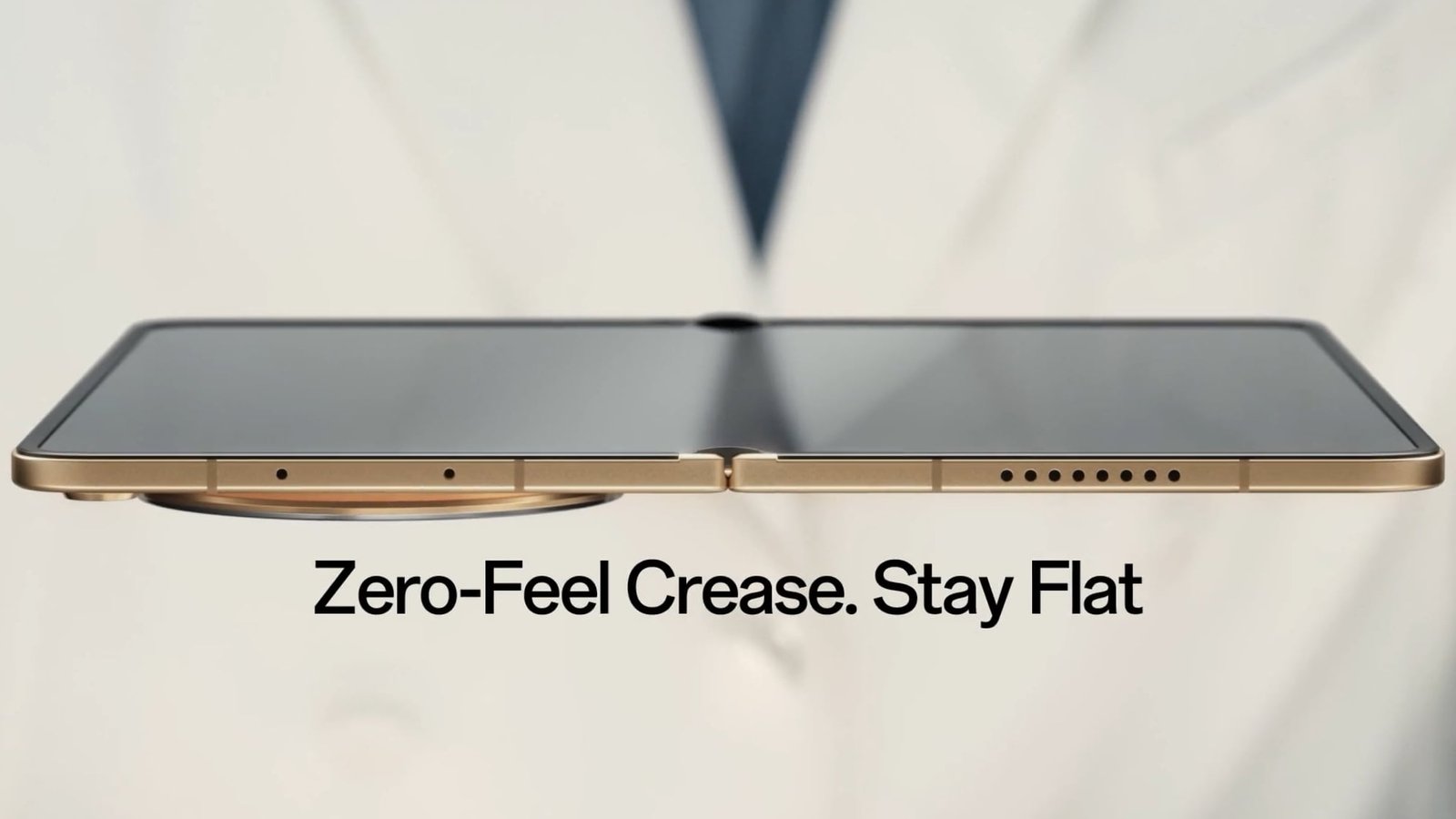

OPPO Unveils the World’s First Foldable Smartphone with “Zero Creases”
OPPO, the world’s fifth-largest smartphone manufacturer, introduced the ‘Find N6’ on the 17th, marking a significant milestone in the foldable smartphone industry. This device is touted as the first foldable smartphone to achieve “zero creases,” a breakthrough that has garnered global attention. OPPO claims it has created the “flattest smartphone” through an innovative hinge design that eliminates creases, setting a new standard in the market.
While Chinese companies have been quick to capture market share in the foldable phone sector by leveraging their domestic markets, they have often faced criticism for prioritizing cost-effectiveness over technological innovation. However, OPPO has now closed the gap with Samsung Electronics, the leading player in the foldable phone market. With Apple planning to launch its first foldable phone this year, industry experts predict a “three-kingdom rivalry” in the foldable phone market by 2026.
China Eliminates Foldable Phone Creases
OPPO announced that the Find N6 achieved “Zero-Feel Crease,” making any creases imperceptible. Although Samsung Electronics initiated the foldable phone era in 2019 with the Galaxy Fold, screen creases remained a persistent issue. OPPO entered the foldable market in 2021 but had limited impact until now. This time, the company has captured the attention of the global tech industry by addressing a longstanding weakness in foldable phones before both Samsung and Apple.
The new device uses Samsung Display’s panels, similar to Samsung’s foldable phones. However, OPPO minimized physical creases through an advanced hinge design and 3D liquid printing. By scanning the hinge, identifying creased areas, and filling gaps with ultra-fine liquid material, OPPO reduced the height difference of creases from the industry standard of 0.2mm to 0.05mm, making them nearly invisible. The company also adopted glass that automatically flattens the screen, reducing crease depth by 82% compared to its previous model.
Reviewers noted that “creases are barely noticeable in daily use,” “the least visible creases among foldable phones tried,” and “smooth enough that fingers don’t detect them.” These improvements have positioned OPPO as a strong contender in the foldable phone market.
Analysts suggest that Chinese foldable phones are shifting from volume-based strategies to targeting premium demand through in-house technology. According to Counterpoint Research, Samsung held 40% of the global foldable market last year, followed by Huawei (30%), Motorola (12%), and Honor (7%). Huawei also preempted the tri-fold phone market in 2024, ahead of Samsung.
Apple Enters, Foldable Market Heats Up
Apple’s expected release of its first foldable phone in the second half of this year is set to expand the market and intensify competition. While Apple delayed its entry, recent advancements in resolving crease and durability issues, coupled with the foldable segment’s premium positioning, have created favorable conditions. Apple’s initial production target is reportedly 20 million units.
Apple’s entry is projected to boost global foldable shipments by 20% year-on-year, with Apple capturing 28% market share—second only to Samsung’s 31%. A smartphone industry insider stated, “Foldable phones still account for only 2–3% of the overall market, leaving significant growth potential. A three-way race between Samsung, Chinese firms advancing in technology, and Apple aiming to reshape the market will intensify this year.”
The introduction of Apple into the foldable market is expected to bring new innovations and set higher standards for performance and user experience. As more players enter the space, the competition is likely to drive further advancements in foldable technology, benefiting consumers and reshaping the smartphone landscape.
Membership Offers for Newspaper Readers
For newspaper readers, there are special membership offers available. One option includes a monthly subscription for 5900 won, with a discounted rate of 2900 won for newspaper subscribers. Another membership package provides access to 8 different newspapers and magazines worth up to 55000 won, along with 7000 points that can be used like cash for shopping. These offers are designed to enhance the reading experience and provide added value to loyal readers.