

The Incident and Immediate Aftermath
An alarming incident has taken place in Indonesia, where four soldiers have been detained for their alleged involvement in an acid attack on Andrie Yunus, a well-known activist who has spoken out against the military’s influence in government affairs. This event has sparked widespread concern and triggered a series of reactions from both local and international entities.
Andrie, a member of KontraS, a prominent rights organization that focuses on investigating forced disappearances, suffered severe burns covering more than 20% of his body after being targeted by two individuals on a scooter who splashed him with acid. The attack occurred last week, leading to immediate medical attention as he was rushed to a hospital in Jakarta. According to a statement from KontraS, the examination revealed extensive burns on various parts of his body, including his hands, face, chest, and eyes.
The motive behind the attack is currently under investigation, according to military police commander Yusri Nuryanto, who mentioned that the four suspects are affiliated with the intelligence unit. Andrie was reportedly riding his motorcycle at the time, having just recorded a podcast discussing the military’s increasing role in politics.
International Reactions and Public Outcry
The incident has drawn significant attention from international bodies. Volker Turk, the UN High Commissioner for Human Rights, expressed deep concern over the attack, highlighting it as an attempt to suppress critical voices. KontraS echoed this sentiment, emphasizing that the attack represents a broader effort to silence those who speak out against the military’s growing influence.
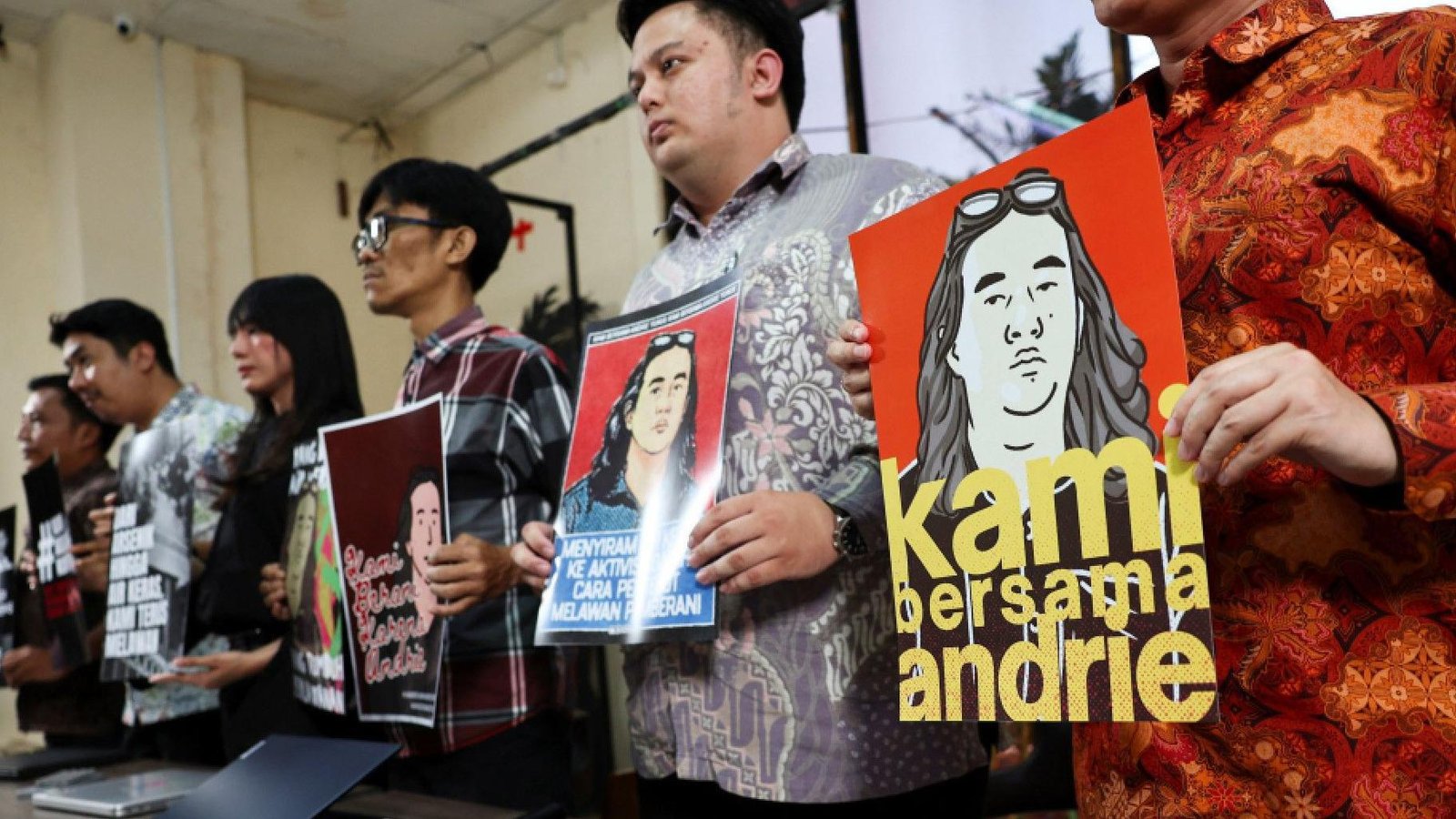
In response to the attack, a wave of public support emerged across the country. Protesters gathered in different regions over the weekend, demonstrating solidarity with Andrie and condemning the violence. These demonstrations underscore the growing anxiety among citizens regarding the safety of activists and the potential consequences of criticizing the military.
Calls for an Independent Investigation
Human rights advocates have urged Indonesian President Prabowo Subianto, a retired general, to establish an independent team to investigate the case thoroughly. Although Prabowo has not publicly addressed these calls, a presidential spokesperson stated on Tuesday that he has ordered an “objective, open and expeditious investigation.”
Andrie has long been a vocal critic of a controversial revision to Indonesia’s military law, which would expand the roles of military officers in government. This bill was passed last year, and Andrie has been actively involved in scrutinizing how authorities handled violent anti-government protests in previous years.
A History of Intimidation
The Civil Society Coalition, an umbrella organization of human rights groups, noted that Andrie had investigated the authorities’ handling of violent anti-government protests. In the days preceding the acid attack, the coalition reported that Andrie had faced “various forms of intimidation,” including calls from unknown numbers.
This incident is part of a larger pattern of intimidation faced by activists in Indonesia. In January, rights campaigners reported receiving threats such as chicken carcasses and at least one Molotov cocktail for their criticism of the government’s response to floods.
Conclusion
The acid attack on Andrie Yunus has raised serious concerns about the safety of activists and the potential repercussions of speaking out against the military. As investigations continue, the need for transparency and accountability remains paramount. The international community, along with local human rights organizations, continues to monitor the situation closely, advocating for justice and the protection of free speech in Indonesia.