

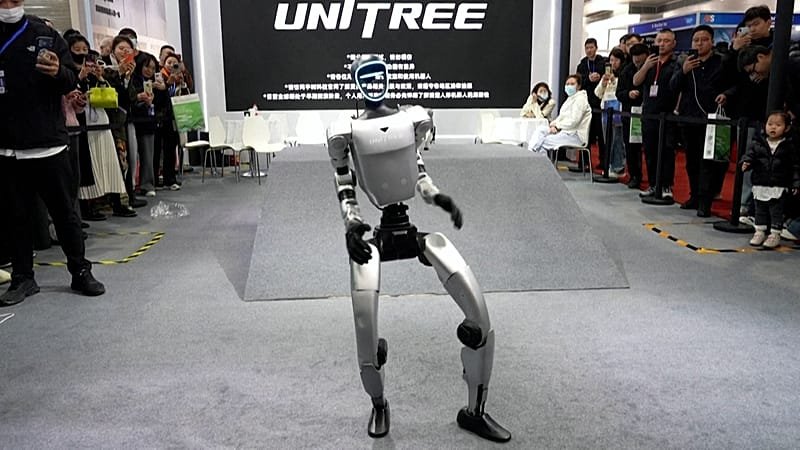
Beijing’s three-day robotics exhibition is attracting large numbers of visitors, showcasing the concept of embodied intelligence. The event brings together both industrial and service robots across a vast 35,000 square meter space, featuring over 600 exhibitors.
In Chaoyang Hall, robots designed to analyze traditional Chinese medicine have drawn consistent crowds. These machines use advanced technology to examine tongue images and pulse data, offering insights that could revolutionize medical practices.
The exhibition, organized by the Beijing Artificial Intelligence Society in collaboration with industry partners, is ongoing until 20 March. It includes various forums and live demonstrations that highlight the latest advancements in robotic technology.
Among the highlights are humanoid robots performing martial arts, demonstrating agility and precision. Quadruped robots navigate obstacle courses, showing their adaptability in challenging environments. Underwater rescue devices also make an appearance, emphasizing the growing importance of robotics in emergency response scenarios.
Some of the systems on display feature real-time AI learning, allowing robots to improve their performance as they interact with their surroundings. Others simulate zero-gravity navigation, which could have significant implications for space exploration and other specialized applications.
The expo serves as a testament to China’s efforts to integrate artificial intelligence into healthcare, manufacturing, and service industries. As global competition in the field of robotics intensifies, this event highlights the nation’s commitment to innovation and technological leadership.
The exhibition not only showcases cutting-edge technology but also provides a platform for experts and enthusiasts to exchange ideas and explore future possibilities. With a wide range of exhibits and interactive experiences, it offers something for everyone, from professionals in the field to curious members of the public.
The focus on embodied intelligence reflects a broader trend in AI development, where robots are no longer just tools but active participants in their environments. This shift has the potential to transform various sectors, making processes more efficient and opening up new opportunities for human-robot collaboration.
As the event continues, visitors can witness firsthand how AI is reshaping the world around us. From medical diagnostics to industrial automation, the possibilities are vast and exciting. The exhibition stands as a powerful reminder of the rapid progress being made in the field of robotics and artificial intelligence.